← 数据结构(2019) 2019-数据结构-数据结构3.0-List 2020-01-17 约 24 分钟阅读 阅读 — 次
ADT定义: a set of objects together with a set of operaions. Abstract data types are mathematical abstractions; nowhere in an ADT‟s definition is there any mention of how the set of operations is implemented. 一组物体和一组操作。抽象数据类型是数学抽象;在ADT的定义中,没有提到如何实现操作集。
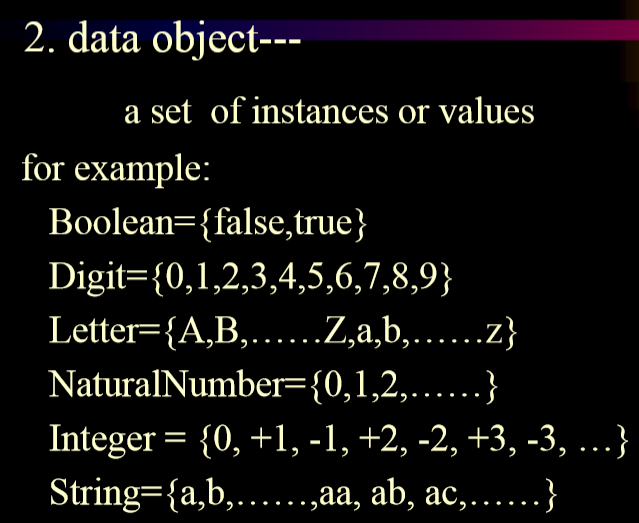
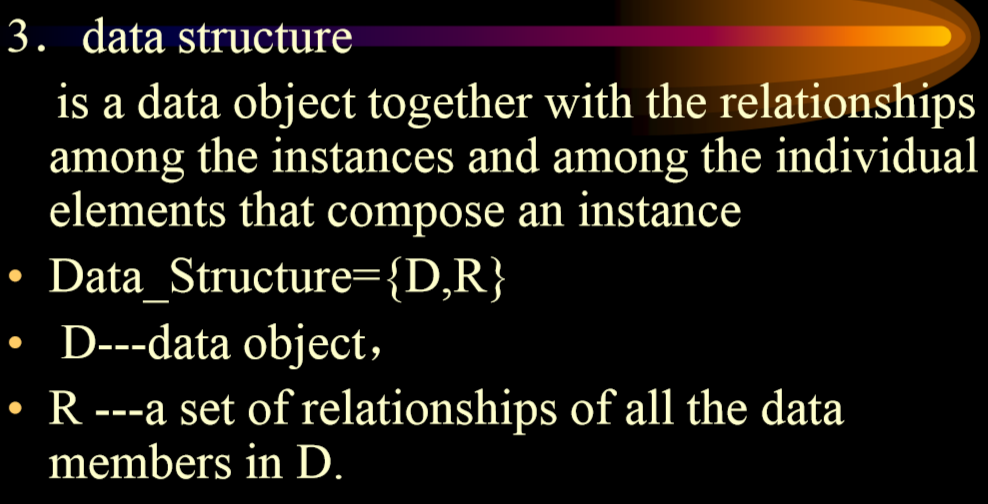
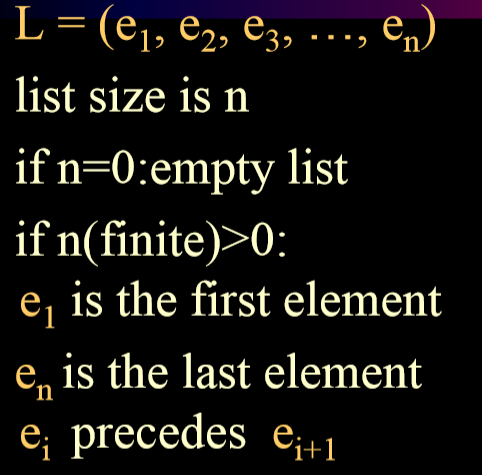
线性表是对象或者值的集合
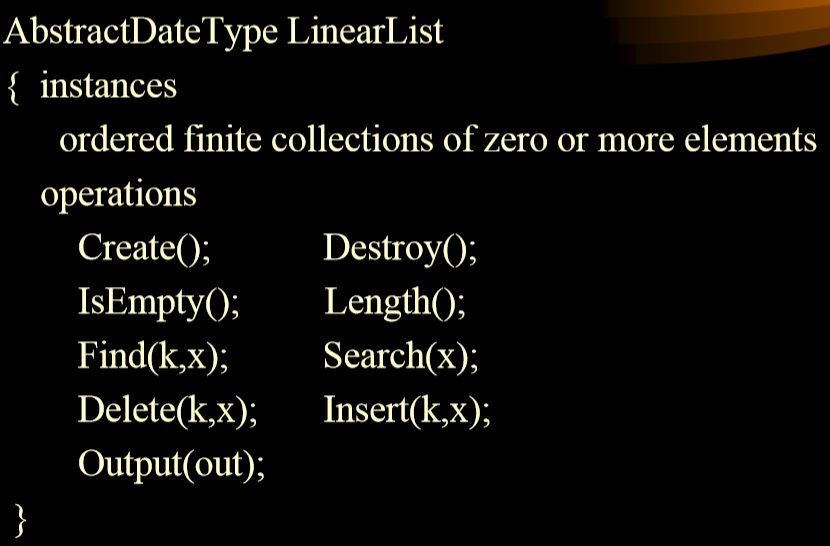
以上是需要实现的方法。
(e1,e2,………en),也就是数组向系统请求了一块连续的内存,数据量大小由程序员来确定。
each position of the array is called a cell or a node mapping formula: location(i)=i-1
从数组类型存储的线性表中取出一个元素的复杂度是O(1)。
一般我们在线性表中放置的是相同类型的值。
顺序查找Search(x)的时间复杂度O(n),平均算法复杂度O((n+1)/2)
删除remove(k,x):delete the k’th element and return it in x
最坏和平均情况下的算法复杂度都是O(n)
平均数据移动次数:(n-1)/2
插入操作insert(x,i)
特点:在内存中不是连续内存。
一个链表节点中存储一个指针,一个数据。
java中的指针是不可以进行加减操作,防止出现一些系统问题。而C++中是可以进行加减运算。
最后的一个指针指向null
删除操作:Delete(index,x)
删除第一个节点:重新指向第一个指针,并且在C++中需要delete掉被解引用的对象。手动释放需要先记下来位置。
删除中间节点:首先查询,之后删除
before.link = before.link.link
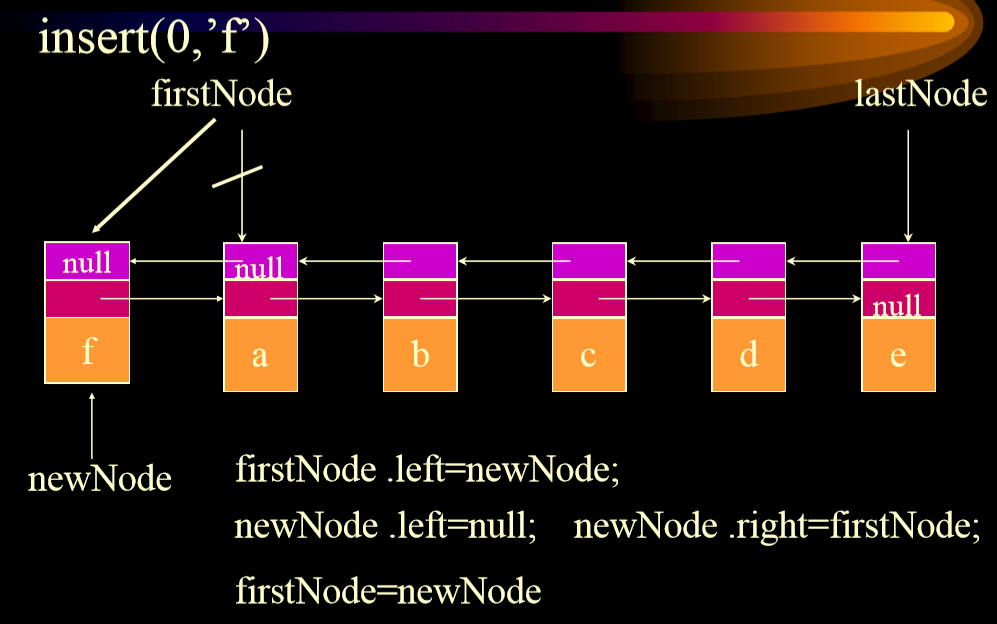
插入操作:insert(index,x)
在线性表开头插入一个元素:首先插入一个元素,然后把头指针指向头。
在线性表中间插入一个元素:首先查询找到相应元素
有一个头节点,Header: 这个节点的数据是没有的,然后指针是指向第一个元素的
ListNode:代表结点的类
LinkedList:代表表本身的类
LinkedListItr:代表游标位置的类
都是包 DataStructure的一部分
1
2
3
4
5
6
7
8
9
10
11
class ListNode { this ( theElement, null );
封装相应的指针操作
1
2
3
4
5
6
7
8
9
10
11
12
13
14
15
16
public class LinkedListItr {public boolean isPastEnd ( ) {return current == null ; public object retrieve () {return isPastEnd( ) ? null : current.element; public void advance ( ) {if ( ! isPastEnd( ) ) current = current.next;
1
2
3
4
5
6
7
8
9
10
11
12
13
14
15
16
17
18
19
20
21
22
23
24
public class LinkedList {private ListNode header;public LinkedList ( ) {new ListNode ( null );public boolean isEmpty ( ) {return header.next = = null ;public void makeEmpty ( ) {null ;public LinkedListItr zeroth ( ) {return new LinkedListItr ( header );public LinkedListItr first ( ) {return new LinkedListItr ( header.next );public LinkedListItr find ( object x ) public void remove ( object x ) public LinkedListItr findPrevious ( object x ) public void insert ( object x, LinkedListItr p )
1 2 3 4 5 6 7 8 9 10 11 public static void printList ( LinkedList theList ) { if ( theList.isEmpty( ) ) "Empty list" );else {LinkedListItr itr = theList.first();for (;! Itr.isPastEnd(); itr. Advance( ) )" " );
1
2
3
4
5
6
public LinkedListItr find (object x) {ListNode itr = header.next;while ( itr != null && !itr.element.equals( x ))return new LinkedListItr ( itr );
时间复杂度O(n)
1
2
3
4
5
public void remove ( object x ) {LinkedListItr p = findprevious( x );if ( p.current.next != null )
时间复杂度O(1)
你可以把findPrevious操作当做是一个单独的先进行的操作,而不是这个操作的一部分。
1
2
3
4
5
public LinkedListItr findPrevious ( object x ) {ListNode itr = header;while ( itr.next !=null && !itr.next.element.equals( x )) itr = itr.next;return new LinkedListItr ( itr );
时间复杂度O(n)
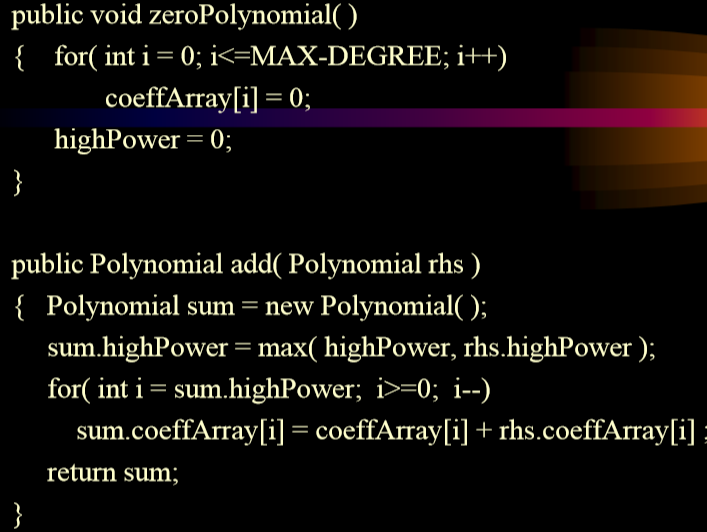
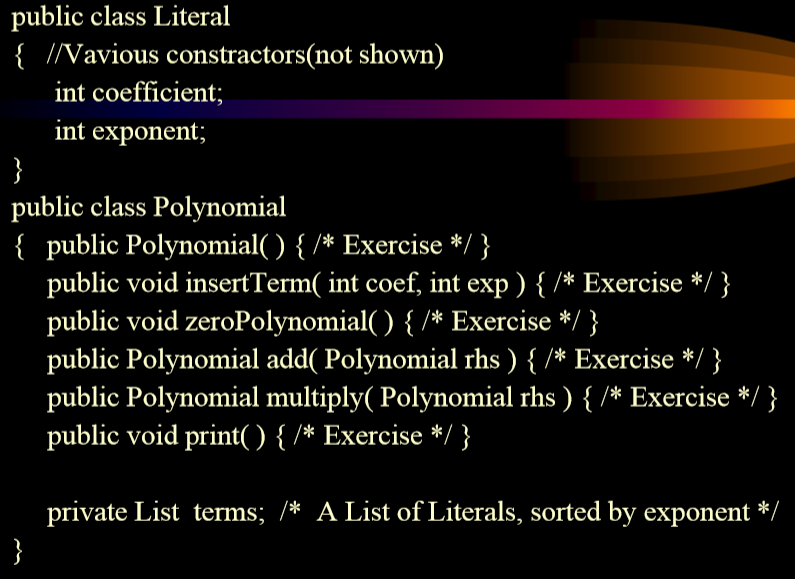
我们对两个多项式求和
方法一:我们对齐相加
方法二:我们用数组来存储指数和参数。
1
2
3
4
5
6
7
8
9
10
11
12
13
14
15
16
17
18
19
20
21
22
23
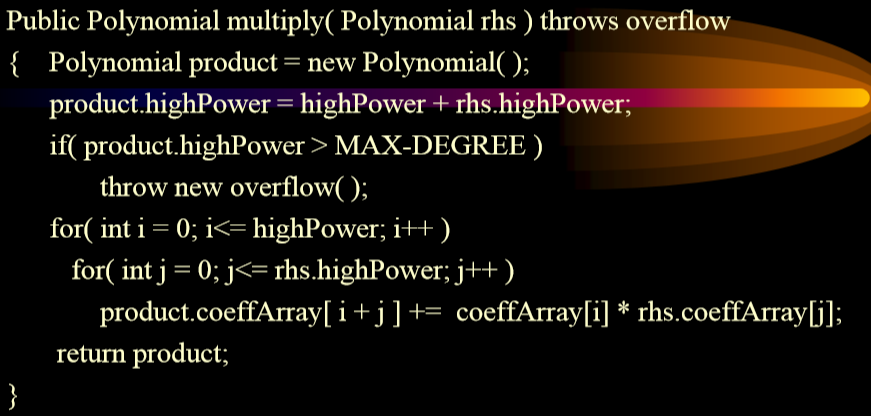
public class Polynomial {public Polynomial ( ) {public void insertTerm ( int coef, int exp ) public void zeroPolynomial () {for ( int i = 0 ; i<=MAX-DEGREE; i++) 0 ;0 ; public Polynomial add ( Polynomial rhs ) {Polynomial sum = new Polynomial ( );for ( int i = sum.highPower; i>=0 ; i--)return sum; public Polynomial multiply ( Polynomial rhs ) throws Overflowpublic void print ( ) public static final int MAX-DEGREE = 100 ;private int coeffArray [ ] = new int [MAX-DEGREE + 1 ];private int highPower = 0 ;
就是最后一个的next指向第一个或者表头
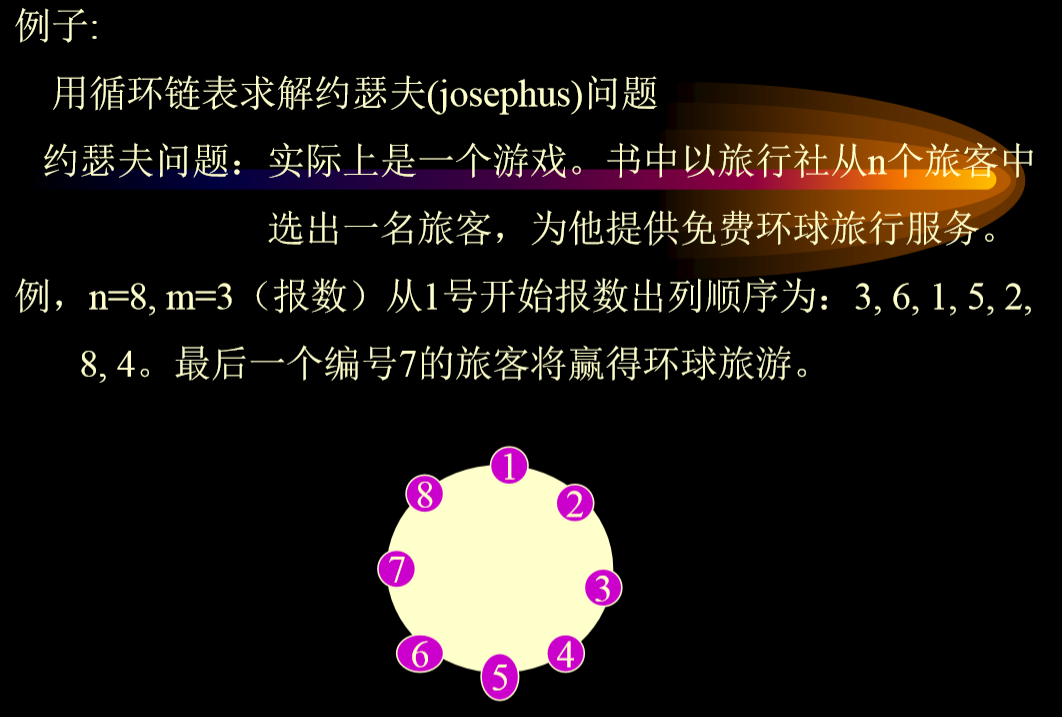
约瑟夫问题
问题解决:
使用新的单链表来记录。
p是最后一个点,降低插入的复杂度
1
2
3
4
5
6
7
8
9
10
11
12
w = m;for ( int i = 1 ; i<= n-1 ; i++) {for (int j = 1 ; j<=w-1 ; j++) rear = rear.link;if (i = = 1 ) { else { null ;
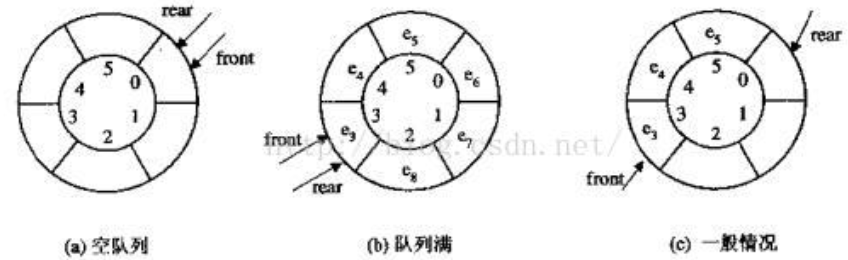
我们不妨设front为队头指针,rear为队尾指针,m为队列最大容量。
入队: rear = (rear + 1) % m
出队: front = (front + 1) % m
队空: front = rear
队满: front = (rear + 1) % m
当前队列中的元素个数: n = (rear - front + m) % m
求队头指针位置: (rear - length + 1 + m) % m
循环队列的相关计算公式
存放非零指数的系数与指数,因此没有节点有三个域组成。
(coef + exp)(item) + link
在具体实现时,并不要再重新申请节点,完全利用原来两个链表的结点。
方法:设4个引用变量:
初始化:pc , pa , pb
当pa和pb都有项时pc永远指向相加时结果链表的最后一个结点。
指数相等(pa. exp==pb. exp)
对应系数相加:pa. coef=pa. coef + pb. coef ;
p= pb(c++需要) ;
pb前进 ;
if (系数相加结果为0){ p=pa; pa前进; } else { pc. link=pa; pc=pa; pa前进}
指数不等 pa. exp< pb.exp //pb要插入结果链表
{pc. link=pb ; pc=pb ; pb前进}
指数不等 pa. exp> pb. exp //pa要插入结果链表
{pc. link=pa ; pc=pa ; pa前进}
当两链表中有一链表为空,则将另一链表链入结果链表就可以 if(pb空了){pc. link=pa;} else pc. link=pb;
算法复杂度:O(m+n)
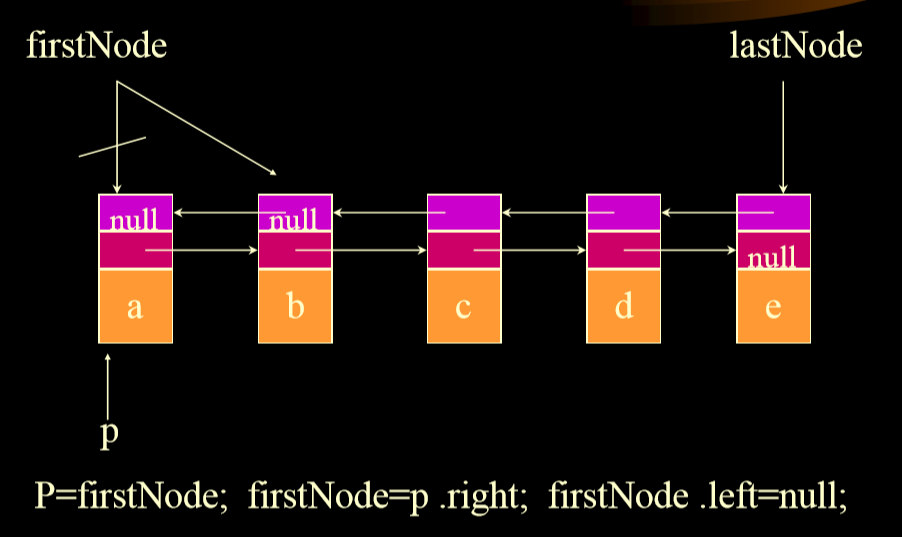
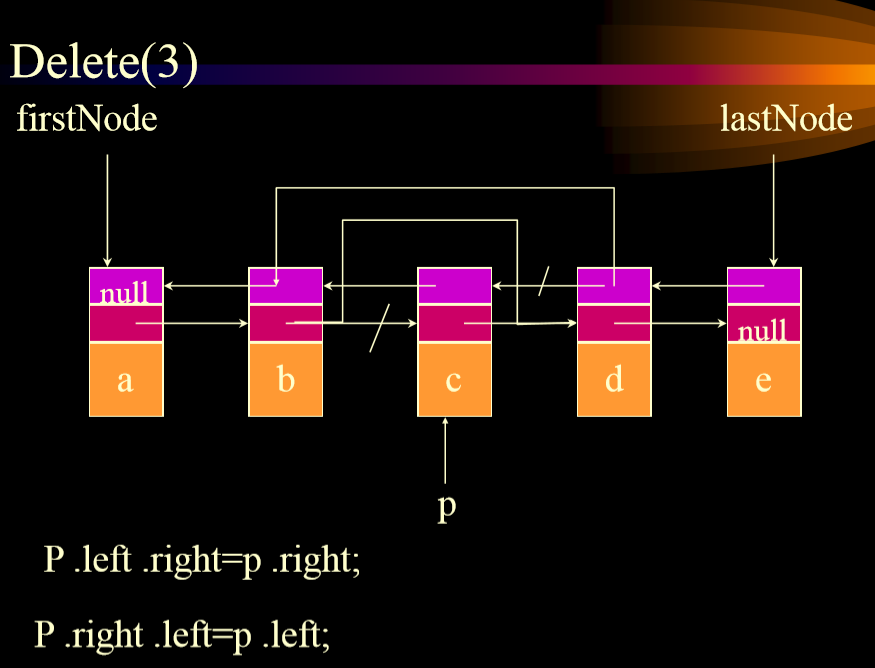
删除开始,删除中间是不同的
删除第一个节点
删除中间
从头插入
从中插入
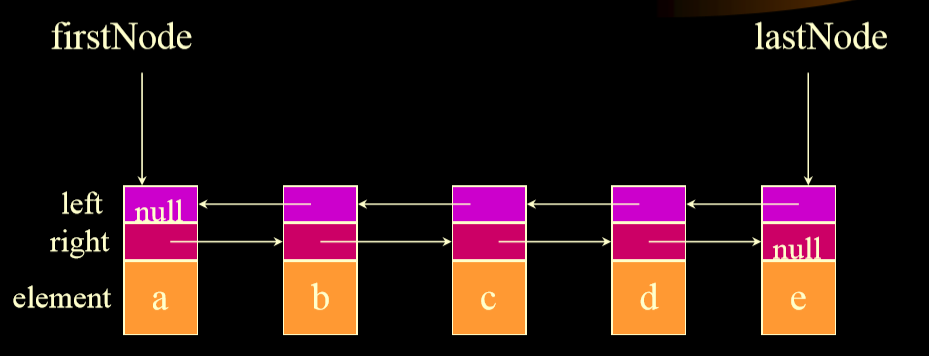
带表头的双向链表
不带表头的双向链表
带表头的空双向链表
算法思想:双指针,第一个指针先跑k步,然后跑第二个指针,第一第二个一起往前跑。
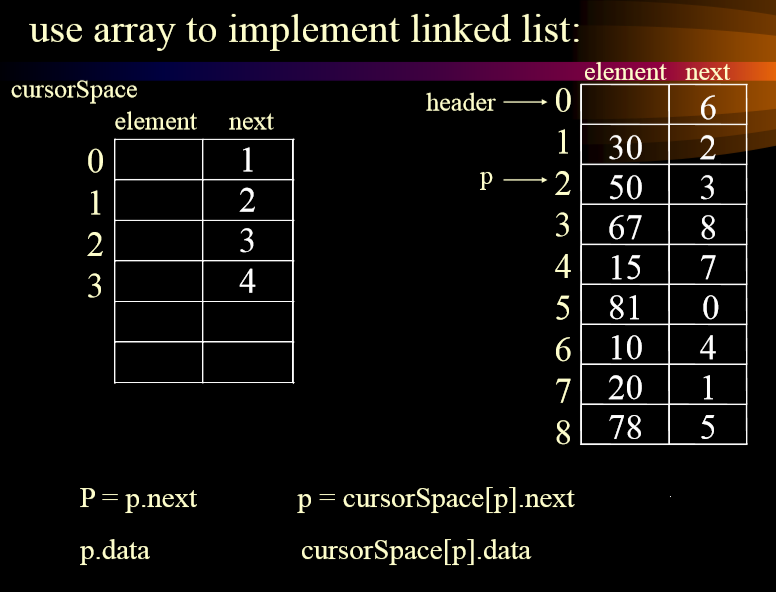
静态链表是由数组实现的单链表。
在系统中,对于系统来说,内存时这样子的被系统管理的。
如果next是0,那么相当于null
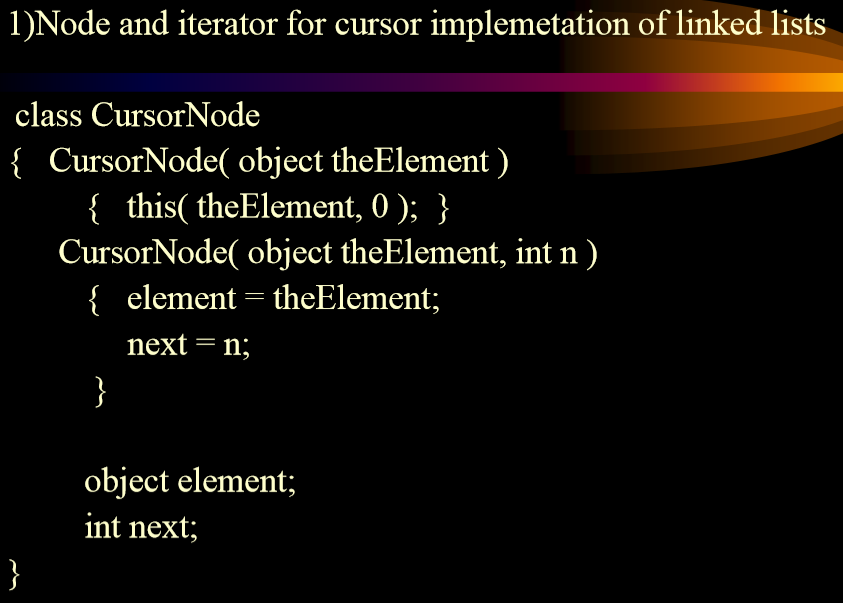
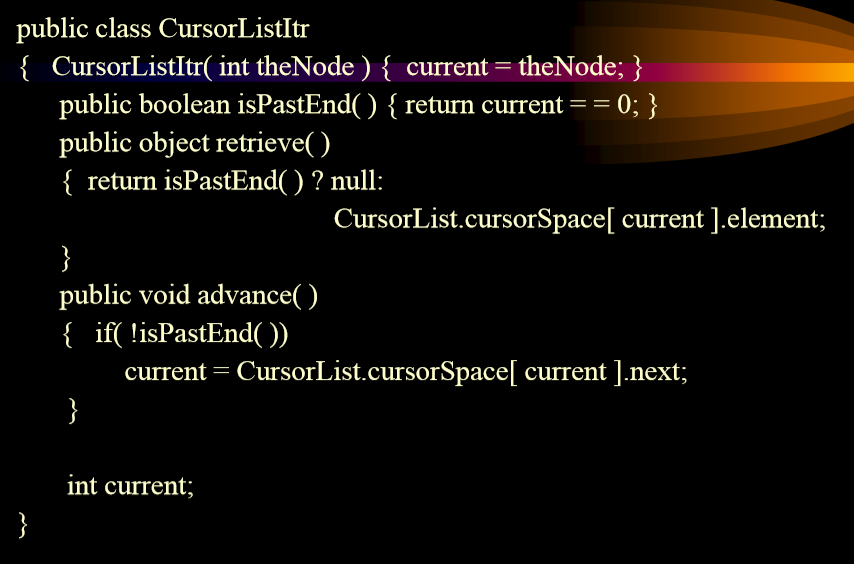
1 2 3 4 5 6 7 8 9 10 11 12 13 14 15 16 17 18 19 20 21 public class CursorList {private static int alloc ( ) private static void free ( int p) public CursorList ( ) { header = alloc( ); cursorSpace[ header ].next = 0 ; }public boolean isEmpty ( ) { return cursorSpace[ header ].next = = 0 ; }public void makeEmpty ( ) public CursorListItr zeroth ( ) { return new CursorListItr ( header ); }public CursorListItr first ( ) { return new CursorListItr ( cursorSpace[ header ].next ); }public CursorListItr find ( object x ) public void insert ( object x, CursorListItr p) public void remove ( object x ) public CursorListItr findPrevious ( object x ) private int header; static CursorNode [ ] cursorSpace;private static final int SPACE-SIZE = 100 ;static {new CursorNode [ SPACE-SIZE ];for ( int i = 0 ; i<SPACE-SIZE; i++) cursorSpace[ i ] = new CursorNode ( null , i + 1 );1 ].next = 0 ;
静态部分是系统管理者的
非静态部分是用户的
将剩余的内存先存储到一个静态链表中去。
1
2
3
4
5
6
7
8
9
10
11
12
13
14
15
16
17
18
19
20
21
22
23
24
25
26
27
28
29
30
31
32
33
34
35
36
private static int alloc ( ) {int p = cursorSpace[ 0 ].next;0 ].next = cursorSpace[p].next;if ( p == 0 ) throw new OutOfMemoryError ( ); return p; }private static void free ( int p ) {null ;0 ].next;0 ].next = p; }public CursorListItr find ( object x ) {int itr = cursorSpace[ header ].next;while ( itr != 0 && !cursorSpace[ itr ].element.equals( x ) )return new CursorListItr ( itr );public void insert ( object x, CursorListItr p ) {if ( p != null && p.current != 0 ) {int pos = p.current;int tmp = alloc( );public void remove ( object x ) { CursorListItr p = findPrevious( x );int pos = p.current;if ( cursorSpace[ pos ].next != 0 ) {int tmp = cursorSpace[ pos ].next;public void makeEmpty ( ) {while ( !isEmpty( ) )




评论